How AI Actually Works: A Simple Explanation Anyone Can Understand
Understand how artificial intelligence really works without technical jargon. Learn about training, patterns, and predictions in plain English with real examples.
You use AI daily. It suggests what to watch, finishes your sentences, and answers your questions. But how does it actually work?
The good news: the core concept is surprisingly simple. You do not need a computer science degree to understand it.
The Big Idea: Pattern Recognition
Here is everything you need to know in one sentence:
AI finds patterns in data and uses those patterns to make predictions.
That is it. Everything else is details about how it finds those patterns and what kinds of predictions it makes.
Let me show you what this means.
A Simple Example: Spam Detection
Your email knows which messages are spam. How?
Step 1: Training Data Someone collected millions of emails already labeled "spam" or "not spam."
Step 2: Finding Patterns A computer analyzed those emails and found patterns:
- Spam often contains words like "free," "winner," "urgent"
- Spam often comes from unknown senders
- Spam often has lots of links
- Spam often uses ALL CAPS
Step 3: Making Predictions When a new email arrives, the system checks it against those patterns. Many spam-like patterns? Probably spam. Few spam-like patterns? Probably legitimate.
The AI never "understands" what spam is. It just learned statistical patterns that distinguish spam from non-spam.
How ChatGPT Works (Simplified)
ChatGPT seems magical. It writes essays, answers questions, and holds conversations. But the principle is the same: pattern recognition.
What it learned: ChatGPT was trained on enormous amounts of text from the internet, books, and other sources. It learned patterns like:
- After "The capital of France is" usually comes "Paris"
- After "Once upon a time" usually comes story-like text
- Questions about cooking usually get answered with recipes and techniques
How it responds: When you type something, ChatGPT predicts what text should come next. It is essentially a very sophisticated autocomplete.
It does not think: "What is the capital of France? Let me remember... Paris."
It actually does: "Given the pattern 'capital of France,' the most likely next word based on my training is 'Paris.'"
This is why AI can be confidently wrong. It predicts likely text, not necessarily true text.
For practical ChatGPT usage, see our ChatGPT tips and tricks guide.
The Training Process
AI does not start smart. It starts knowing nothing and learns from examples.
Imagine Teaching a Child
If you showed a child thousands of pictures of cats and dogs, labeling each one, eventually the child would recognize new cats and dogs they had never seen.
AI training works similarly:
- Show many examples: Millions or billions of data points
- Provide correct answers: Labels, categories, or expected outputs
- Let it guess: AI makes predictions
- Correct mistakes: AI adjusts when wrong
- Repeat endlessly: Until patterns are learned
This process can take days or weeks on powerful computers, processing billions of examples.
What "Learning" Really Means
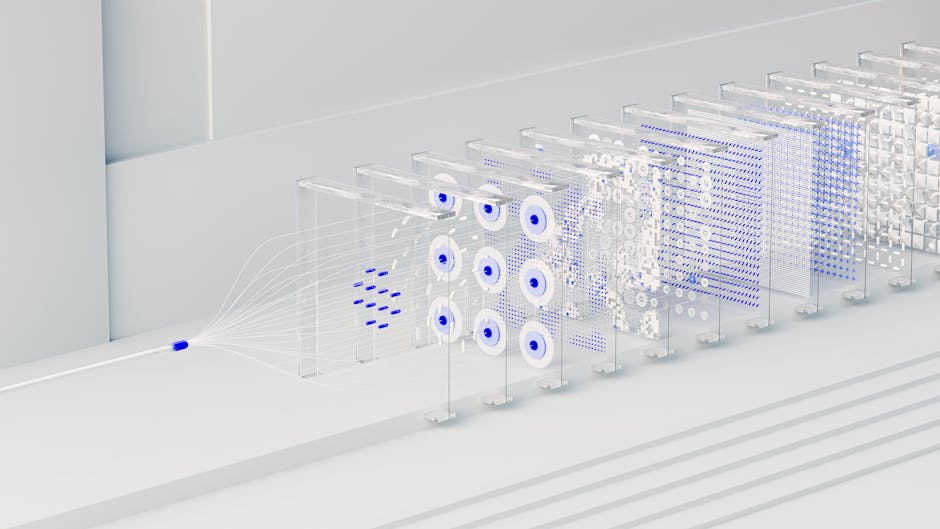
When we say AI "learned," we mean it adjusted internal settings (called weights or parameters) to better match patterns in training data.
Think of it like tuning a radio. Billions of tiny dials get adjusted until the output matches what was expected during training.
ChatGPT has 175+ billion of these adjustable parameters. That is why it can capture so many patterns.
Types of AI Tasks
AI applies pattern recognition to different problems:
Classification
Question: What category does this belong to?
Examples:
- Is this email spam or legitimate?
- Is this image a cat or dog?
- Is this review positive or negative?
The AI learned patterns for each category and assigns new items to the best-matching category.
Generation
Question: What should come next?
Examples:
- What text follows this prompt? (ChatGPT)
- What image matches this description? (DALL-E)
- What music fits this style? (AI music tools)
The AI learned patterns of good text, images, or music and generates new content following those patterns.
See our AI image generation guide for visual AI.
Prediction
Question: What will happen?
Examples:
- Will this customer churn?
- What will the stock price be?
- Will this patient respond to treatment?
The AI learned patterns from historical data and predicts future outcomes based on similar patterns.
Recommendation
Question: What would this person like?
Examples:
- What should Netflix suggest?
- What products might this shopper buy?
- What songs fit this playlist?
The AI learned patterns connecting users to content and predicts what new content matches each user's patterns.
What AI Cannot Do
Understanding limitations is as important as understanding capabilities.
AI Cannot Understand
AI has no comprehension. It manipulates patterns without knowing what they mean.
When ChatGPT discusses philosophy, it is not pondering existence. It is predicting what philosophy-discussion-text looks like based on training data.
AI Cannot Reason (Really)
AI can appear to reason because logical arguments follow predictable patterns. But it is pattern matching, not actual logical thinking.
This is why AI sometimes fails at simple logic puzzles that require genuine reasoning.
AI Cannot Know Current Events (Unless Designed To)
Most AI systems learned from data with a cutoff date. They do not know what happened yesterday unless they can access the internet in real-time.
AI Cannot Be Creative (Genuinely)
AI generates novel combinations of patterns it learned. This can look creative, but it is remixing, not true innovation.
Genuine creativity involves conceptual leaps AI cannot make.
For deeper discussion, see our AI vs human writers comparison.
Common Misconceptions
"AI is a brain"
No. Brains work completely differently. AI is math, specifically statistics and optimization. The "neural network" name is metaphorical, not literal.
"AI will become conscious"
Current AI technology has no path to consciousness. Making bigger models or faster computers does not create awareness. We do not even know what consciousness is scientifically.
"AI understands me"
AI predicts responses that seem understanding. Actual understanding requires something AI does not have, genuine comprehension of meaning.
"AI is always right"
AI is often wrong, especially about facts it did not encounter frequently in training, recent events, or anything requiring actual reasoning.
For honest assessment, see why AI fails and common mistakes.
Why This Matters
Understanding how AI works helps you:
Use it better: Knowing AI predicts patterns helps you write better prompts and interpret outputs correctly.
Spot limitations: You will recognize when AI is likely wrong or inappropriate for a task.
Stay grounded: Neither fear nor hype about AI makes sense when you understand the fundamentals.
Make informed decisions: Whether for business or personal use, understanding AI helps you choose when and how to apply it.
The Key Takeaway
AI is not magic or mystery. It is pattern recognition at massive scale.
When you understand this, AI becomes a tool you can evaluate, use, and improve your work with, rather than something to fear or blindly trust.
The AI finding patterns in data is impressive engineering. But it is engineering, not intelligence. Understanding the difference makes you a smarter AI user.
What to Learn Next
Ready to go deeper? Here is a learning path:
- What is Artificial Intelligence: Beginner's Guide - broader AI overview
- Machine Learning Explained Simply - the technical foundation
- Deep Learning and Neural Networks - how modern AI models work
- Learn AI from Scratch - practical learning roadmap